
The Modern Pickleball Warmup: Prevent Injuries and Play Better
Pickleball has exploded in popularity, growing from 3.3 million players in 2019 to 8.9 million in 2023. But with this growth comes a concerning trend: a 90-fold increase in pickleball-related fractures, with most injuries affecting players over 60. The good news? A proper warmup can dramatically reduce your injury risk while improving your performance on the court.
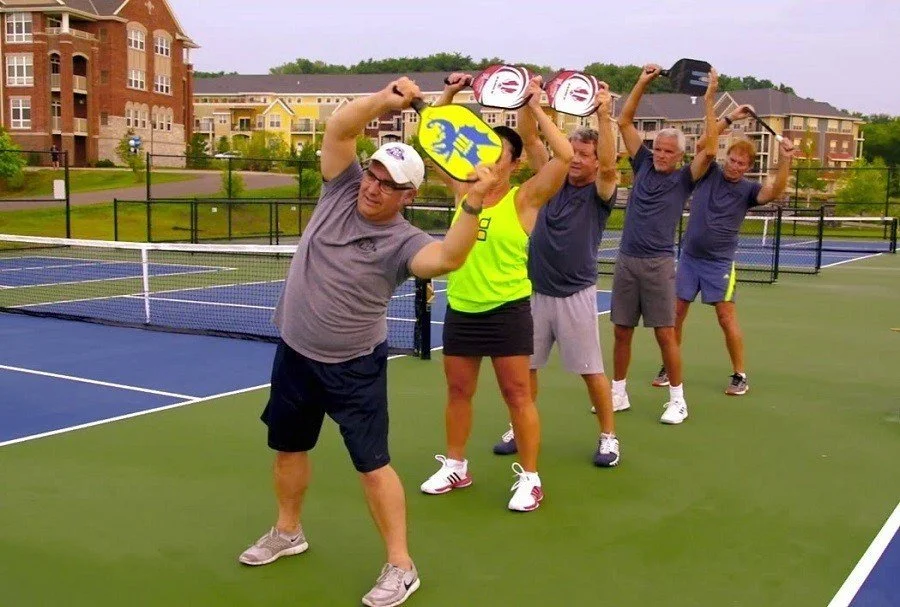
Source : Physio Labs
Why Dynamic Warmups Are Essential
Research consistently shows that dynamic warmups, continuous, controlled movements that take your muscles through their full range of motion are in fact, superior to traditional static stretching before physical activity. A comprehensive analysis of 31 studies published in the British Journal of Sports Medicine found that active warmups incorporating dynamic movements enhance power and strength performance significantly.
Unlike static stretching, which can actually reduce muscle force and power when performed before activity, dynamic warmups increase blood flow, activate your central nervous system, and prime your muscles for the rapid movements pickleball demands. Studies show dynamic warmups can improve performance by up to 79% across various athletic criteria.
The Science Behind Injury Prevention
Pickleball injuries typically fall into two categories: acute injuries from falls, sprains, and sudden movements, and overuse injuries like "pickleball elbow" from repetitive motions. Research from the University of Tennessee Chattanooga found that 63% of pickleball-related injuries treated in emergency departments were from falls, with lunging and moving backward being the primary culprits.
The most common injuries include:
Strains and sprains (particularly ankles and knees)
Fractures (more common in women over 60)
Tendonitis in shoulders, elbows, and wrists
Achilles tendonitis from quick directional changes
A proper warmup addresses these risks by preparing your joints and muscles for the specific movements required in pickleball.
Your 7-10 Minute Dynamic Warmup Protocol
Sports medicine experts recommend dedicating 5-10 minutes to warming up before play. Here's what an evidence-based pickleball warmup should include:
Phase 1: Light Aerobic Activity (2-3 minutes) Start with light jogging, jumping jacks, or shuffling side-to-side to raise your core temperature. You should have light perspiration before moving to dynamic stretches. It indicates your body is properly warmed.
Phase 2: Dynamic Movements (4-5 minutes) Perform these sport-specific movements:
Arm circles (forward and backward, varying sizes)
Walking lunges to activate hips and legs
Leg swings (front-to-back and side-to-side)
Torso rotations to engage your core
High knees and butt kicks
Lateral shuffles mimicking court movement
Phase 3: Sport-Specific Drills (2-3 minutes) Finish with low-intensity movements that mirror actual play:
Practice serves at 50-75% intensity
Light volleys and dinking
Movement patterns specific to your position
Key Points Backed by Research
The evidence is clear: dynamic warmups should be performed immediately before play, take 7-10 minutes minimum, and include movements that replicate the demands of your sport. Research shows this approach can reduce overall injury risk by 35% and severe injuries by nearly 50%.
For players new to pickleball or those who haven't been regularly active, gradually build up playing time and consider cross-training with low-impact activities like swimming or stationary cycling to improve cardiovascular endurance without stressing joints.
Save Static Stretching for After Play
Static stretching has its place, but research shows it's most effective after activity, not before. Post-game static stretching improves flexibility and aids recovery. Studies indicate that static stretching before activity lasting more than 60 seconds can actually decrease performance by reducing muscle force production.
Conclusion
Treating pickleball warmups as optional is risky. The sport may seem casual compared to tennis, but it places significant demands on your body, especially with the quick lateral movements, lunges, and overhead shots. Taking 7-10 minutes to properly warm up with dynamic movements prepares your nervous system, increases muscle elasticity, and significantly reduces injury risk, thus allowing you to play better and stay on the court longer.