
Side-Out Scoring for Beginners
If you've just picked up a pickleball paddle for the first time, you've probably noticed something unusual about how points are scored. Unlike tennis or volleyball, where either team can score on any rally, pickleball uses a unique system called side-out scoring. At first glance, it can seem confusing, but once you understand the basic principles, you'll find it adds an interesting strategic layer to the game.
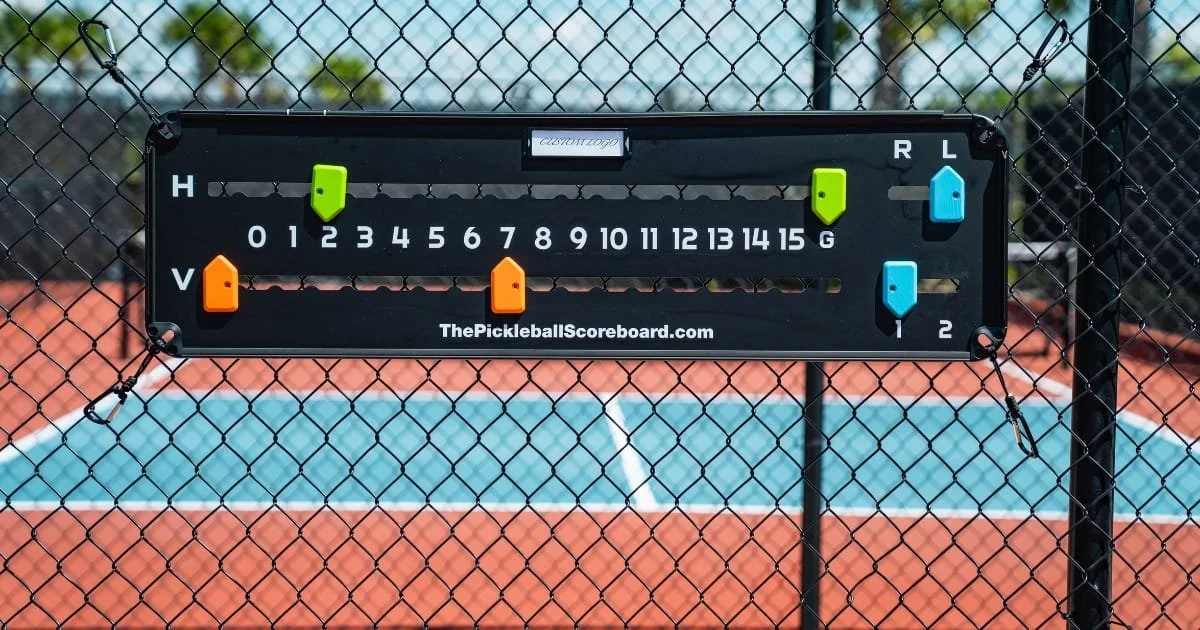
Source : The Pickleball Scoreboard
What Is Side-Out Scoring?
Side-out scoring is the traditional and official scoring system used in pickleball. The fundamental rule is simple: only the serving team can score points. If the receiving team wins a rally, they don't earn a point. Instead, they earn the right to serve, which gives them the opportunity to score.
Think of it like this. In baseball, only the team at bat can score runs. The team in the field must get three outs before they get their chance to score. In pickleball, the receiving team is like the team in the field. They must win rallies to earn the serve, and only then can they start putting points on the board.
A "side out" occurs when the serving team loses the rally and the serve transfers to the opposing team. This back and forth rhythm defines the flow of a pickleball game.
The Three Number Score
One of the most confusing aspects for beginners is understanding why pickleball scores have three numbers. When you hear someone call out "4-2-1," what does that mean?
Here's the breakdown:
First number: Your team's score Second number: The opposing team's score Third number: The server number (either 1 or 2)
So when you hear 4-2-1, it means your team has 4 points, the other team has 2 points, and you are the first server on your team for this service turn.
The server number is crucial in doubles play because each team gets two opportunities to serve before a side out occurs. The player on the right side of the court serves first (server 1), and if that player's team loses the rally, the serve passes to their partner (server 2). When the second server loses a rally, a side out happens and the other team gets to serve.
The Starting Score: 0-0-2
Every pickleball game begins with an unusual score: 0-0-2. This quirky starting point confuses many newcomers, but there's a logical reason behind it.
At the start of the game, the team that wins the coin toss (or rock-paper-scissors) gets to serve first. However, to prevent too much of an advantage, that team only gets one server instead of the usual two. The player on the right side serves, and if they lose the rally, it's immediately a side out. The score starts at 0-0-2 to indicate that the first serving team is already on their "second server" and will lose the serve after just one fault.
After this initial serve, the game proceeds normally with both teams getting two servers per side out.
Even and Odd: Court Positioning
Understanding court positioning is essential for proper serving. The rule is straightforward:
Even score = Right court Odd score = Left court
When your team's score is even (0, 2, 4, 6, 8, 10), the player who served first for your team at the beginning of the game should be standing on the right side of the court. When your score is odd (1, 3, 5, 7, 9), that same player should be on the left side.
This positioning rule helps everyone track who should be serving and from which side. If you ever get confused about the score during a game, check which side of the court you're standing on and remember where you started. Your position should match your score.
How Points Are Scored
Only the serving team can score points, and they earn a point each time they win a rally. When the serving team scores, the server switches to the opposite side of the court and continues serving. The partners keep switching sides with each point scored until they lose a rally.
The receiving team never switches sides during a service turn. They stay in their positions until they win the rally and become the serving team themselves.
Here's an example of how a typical service turn unfolds:
Team A serves from the right side, score is 0-0-1
Team A wins the rally and scores a point (1-0-1)
The server on Team A switches to the left side and serves again
Team A wins again and scores (2-0-1)
The server switches back to the right side
Team A loses the rally, and the serve passes to their partner (2-0-2)
The second server serves from whichever side they're already standing
Team A loses another rally, causing a side out
Team B now serves, starting with the player on the right side (0-2-1)
Winning the Game
Most recreational pickleball games are played to 11 points, and you must win by at least 2 points. If the score reaches 10-10, the game continues until one team gains a 2-point advantage. This means games can technically go to 12-10, 15-13, or even higher scores.
Tournament play sometimes uses 15 or 21 points as the winning target, but the win by 2 rule always applies.
Singles Scoring Differences
If you're playing singles, the scoring system simplifies considerably. Since there's no partner, there's no second server. The score only has two numbers: your score and your opponent's score.
You serve from the right court when your score is even and from the left court when your score is odd. When you lose a rally, it's immediately a side out, and your opponent becomes the server. This creates a faster back and forth rhythm compared to doubles.
The starting score in singles is 0-0, not 0-0-2, since there's no second server exception needed.
Common Beginner Mistakes
Serving from the wrong side: Always check your team's score before serving. Even scores require serving from the right, odd scores from the left.
Assuming the same player is always server 1 or server 2: The server number applies only to that specific service turn. After a side out, whoever is on the right side of the court becomes server 1 for that new service turn, regardless of who served first earlier in the game.
Receiving team switching sides: Only the serving team switches sides when they score. The receiving team stays put until they earn the serve through a side out.
Calling the wrong score: Take a moment before each serve to confirm the score with your partner and opponents. Clear communication prevents confusion and arguments.
Why Side-Out Scoring Matters
Understanding side-out scoring goes beyond just keeping track of numbers. It fundamentally shapes pickleball strategy. Since you can only score while serving, maximizing each service opportunity becomes critical. Serving teams tend to play more aggressively, knowing this is their chance to build a lead. Receiving teams focus on consistency and patience, waiting for their opportunity to earn the serve.
The system also creates natural momentum shifts. A team might dominate for several rallies while serving, building a comfortable lead, only to see the momentum reverse when a side out occurs and their opponents get hot during their service turn.
Practice Makes Perfect
The best way to master side-out scoring is simply to play. In your first few games, don't worry if you need to pause frequently to figure out the score or confirm who should be serving. Most pickleball players are friendly and patient with beginners who are still learning.
Consider playing some practice games where you focus specifically on calling the score correctly before each serve. This repetition will make the system feel natural much faster than trying to memorize rules from a book.
Many players also find it helpful to use scoring apps on their phones or smartwatches during casual play. These tools can track the score automatically and help you verify you're following the rules correctly as you learn.
Rally Scoring: The Alternative
While side-out scoring remains the official standard for USA Pickleball sanctioned tournaments and recreational play, you should know that an alternative exists. Rally scoring, used by some professional leagues and increasingly in certain tournament formats, allows both teams to score on every rally regardless of who is serving.
Rally scoring games typically go to 15 or 21 points and move much faster since points accumulate more quickly. USA Pickleball provisionally approved rally scoring for certain tournament formats in 2025, but side-out scoring remains the default for most play.
As a beginner, focus on learning side-out scoring first. It's what you'll encounter in nearly every recreational game and local tournament.
Final Thoughts
Side-out scoring might seem complicated at first, but it's one of those things that clicks into place once you've played a few games. The three number system, the even/odd positioning, and the concept of earning the serve rather than earning points directly all work together to create pickleball's unique competitive dynamic.
Don't let scoring confusion keep you off the court. Jump in, ask questions when you're unsure, and remember that every experienced player was once exactly where you are now. Within a few sessions, you'll be calling out scores like a pro and focusing on what really matters: enjoying one of the fastest growing and most social sports in the world.
Grab your paddle, find a court, and start playing. The scoring will make sense soon enough, and you'll be hooked on pickleball before you know it.