
Franklin's Big Bet: How Signing Anna Leigh Waters Could Reshape the Pickleball Equipment Market
Franklin Sports made one of the most significant moves in pickleball history this January when they officially signed Anna Leigh Waters, the sport's number one ranked player in women's singles, doubles, and mixed doubles, to a long-term partnership deal. The signing ended a seven year run Waters had with Paddletek and immediately sent shockwaves through the equipment market.
Source: Franklin Sports
Why This Deal Matters Beyond the Press Release
At 18 years old, Waters is already the most decorated player in PPA history with 181 gold medals and 39 career triple crowns. That kind of dominance gives Franklin something no advertising budget can buy: credibility at the highest level of play. For a brand that has long been recognized for its X-40 ball, which currently holds the top spot in the sport, this signing is a direct statement that Franklin wants to own the paddle market too.
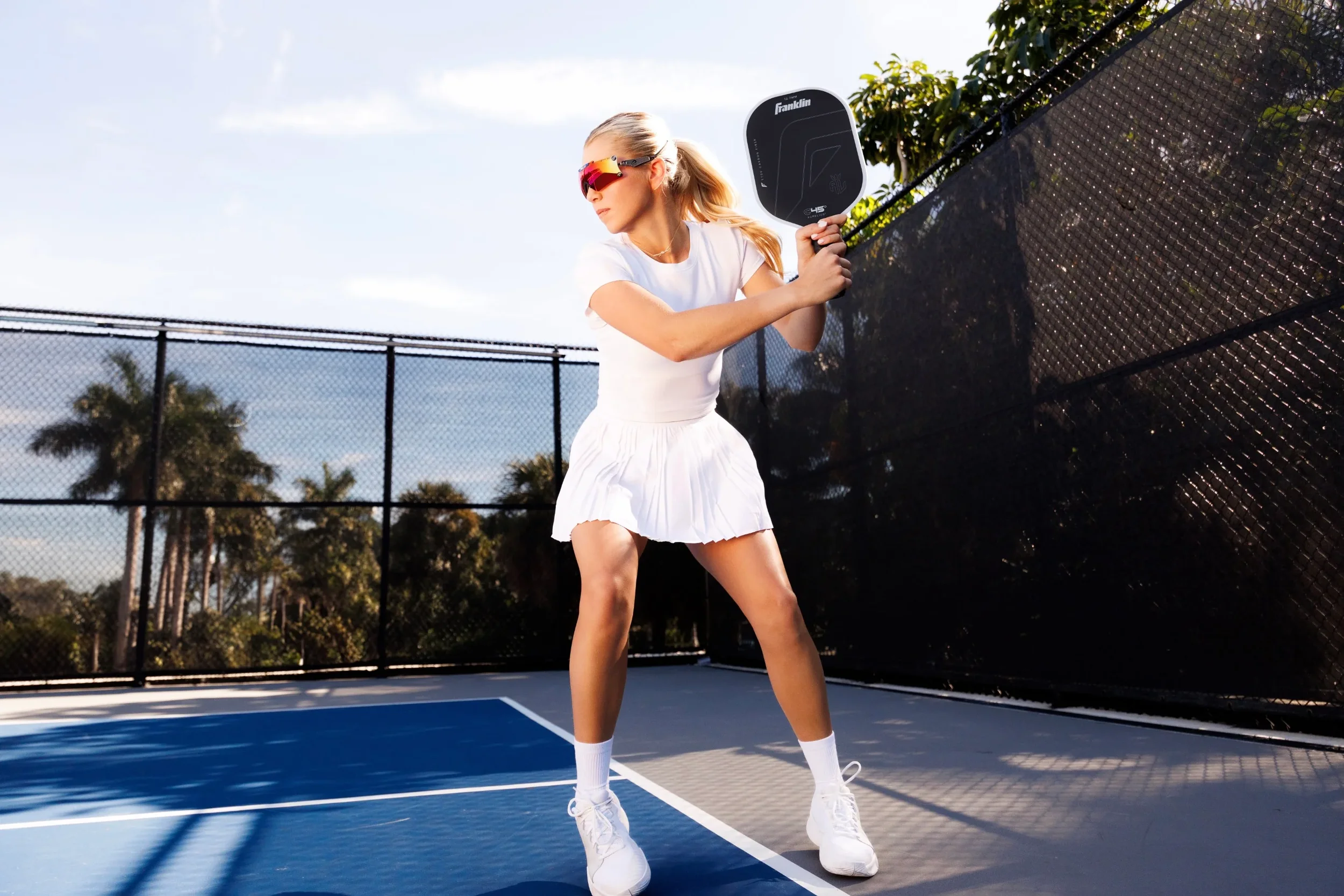
The deal covers far more than slapping a name on an existing product. Waters will co-design a full signature line that includes paddles, bags, and accessories, and the two parties are also collaborating on a brand new pro-level pickleball to complement the X-40 lineup. Franklin's C45 Carbon Fiber Paddle platform serves as the foundation, with Waters already competing on a 12.7mm version of her signature Aurelius paddle, which received UPA-A certification in early February.
The Franklin vs. the Field Question
Franklin had a version of this moment before. Ben Johns spent years as the face of the brand before leaving for JOOLA in 2022, a departure that left a real void in their pro roster. Since then, Franklin leaned on rising stars Hayden Patriquin and Parris Todd, both talented players, though neither carried the mainstream star power that moves product off shelves at scale.
Waters changes that calculation. Brands like Selkirk and JOOLA have built strong identities in the competitive space, but Franklin's reach extends well beyond pickleball through decades of relationships with the NFL, NBA, MLB, and other major leagues. Waters competing with a paddle she helped design, in markets worldwide, gives Franklin a story to tell that goes beyond spec sheets and grit ratings.
What Comes Next
All eyes are now on the apparel side. Waters' deal with Fila reportedly ended at the close of 2025, and an undisclosed new apparel partner is expected to be announced. She was spotted training in Nike gear earlier this year, and speculation has been loud, though nothing official has been confirmed. Franklin's deal is centered on equipment, meaning a separate apparel agreement is likely still in the works.
For recreational players wondering whether to pick up the Aurelius, it ships starting March 1st and is available for pre-order in three thicknesses. For the broader industry, the question worth watching is whether this signing accelerates Franklin back to the top tier of the paddle market or whether it takes a full season of results to shift buyer behavior. Either way, pickleball's equipment landscape looks noticeably different than it did six weeks ago.
The 2026 Rule Changes Every Rec Player Actually Needs to Know
USA Pickleball rolled out its updated official rulebook on January 1, 2026, and if your feed has been full of takes about how the sport is either saved or ruined, take a breath. Most of these changes are refinements, not overhauls. But a few of them will actually affect how games play out, especially if you're competing in sanctioned tournaments or organized leagues.
Here's what you actually need to pay attention to.
The Scoring Change That Kills the Freeze
This one matters the most for anyone who has ever been stuck at game point, unable to close out a match because the rules required the serving team to score the final point. That rule is gone.
Under the 2026 rulebook, either the serving or receiving team can now score the game-winning point in rally scoring formats. If you're up 14 to 10 in a game to 15 and your opponent dumps a serve into the net, the game is over. You win. The old system created a legitimate competitive imbalance where the team trailing could keep scoring freely while the leading team sat frozen, waiting for a serve. The new rule fixes that. Games end faster, the outcomes feel more earned, and the frustrating drawn-out finishes that had players complaining for years should largely disappear.
The Serve Just Got Stricter
The volley serve mechanics themselves have not changed. What changed is the language used to judge them. USA Pickleball added the words "clear" and "clearly" to the three criteria that determine whether a volley serve is legal, covering the upward arc of the paddle, the position of the paddle head relative to the wrist, and the height of the ball at contact.
In practical terms, this means that if a referee cannot confidently say a serve meets all three criteria, it gets called as a fault. The benefit of the doubt no longer goes to the server. Players who have been nudging up against the limits of what the old language allowed will need to adjust, because close calls are now decided against them.
Referees Have Authority Before the Match Starts
A notable sportsmanship change gives referees the power to issue verbal warnings and technical fouls during warmups and pre-match briefings, not just once play begins. This came out of a broader push to close loopholes in conduct enforcement after several high-profile incidents in 2025, including at least one widely shared incident involving a physical altercation following a match. Tournament directors also now have clearer authority to eject players for acts of violence or property damage.
For most casual players at local parks, this has zero impact on a Tuesday evening game. In tournament settings, it signals that referees are no longer waiting for the first rally to enforce expectations.
Adaptive Play Gets a Formal Structure
The 2026 rulebook formalizes a recognized Adaptive Standing Division for players who compete standing but have a permanent physical disability that significantly affects their mobility, balance, or coordination. These players are permitted to let the ball bounce twice before returning it, with the second bounce allowed to land anywhere on the playing surface. In doubles with one adaptive player and one standard player, the two-bounce rule applies only to the adaptive player.
This is a meaningful step for the sport's inclusivity and reflects a real effort from USA Pickleball to work directly with the adaptive community rather than apply a generic framework.
The Bottom Line for Club Players
Your game on a recreational court is not going to feel dramatically different. The core of pickleball is unchanged. What these rules are doing is tightening the competitive experience, removing gray areas that referees and players have argued over for years, and building a structure that can handle the growing number of players entering organized and adaptive divisions. Know the scoring change, clean up your serve, and keep your composure from the moment you step onto a match court. That covers the vast majority of what 2026 is asking of you.