
2026 USA Pickleball Rule Changes: What Players Need to Know
As we step into 2026, USA Pickleball has officially released its updated rulebook, effective January 1, 2026. While the core mechanics of the game remain largely unchanged, several key revisions aim to clarify gray areas, improve competitive integrity, and make the sport more inclusive. Whether you're a recreational player or a tournament competitor, understanding these changes will help you stay ahead of the game.
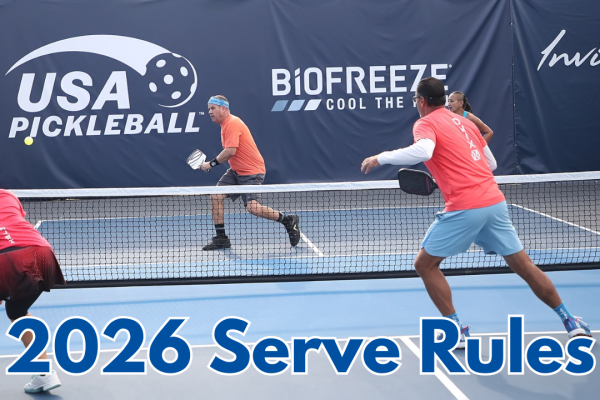
Source : Better Pickleball
The Rule Change Process: Understanding How Updates Happen
Before diving into specific changes, it's worth understanding how USA Pickleball updates its rules. The process begins each April when eligible members can submit proposed rule changes through early June. These proposals enter a public database where anyone can comment until mid-June. The Rules Committee then reviews all submissions and public feedback throughout the summer and fall, forwarding their recommendations to the Board of Directors for final approval. The new rulebook is published in mid-December, giving players time to familiarize themselves before the January 1 effective date.
For 2026, there were 114 proposed rule changes submitted—down from 133 the previous year. Of these, 72 were disapproved, 23 were approved as submitted, and 19 were approved with amendments. Most changes are editorial clarifications rather than major overhauls, but several have significant implications for gameplay.
Rally Scoring: Eliminating the "Freeze"
One of the most talked-about changes involves rally scoring formats. Previously, teams could only score the match-winning point while serving, which often led to a frustrating "freeze" where the leading team struggled to close out the game despite having a significant advantage.
The 2026 Update: Under the new rules, either the serving or receiving team can now score the game-winning point in rally scoring formats. This means that when you're ahead 14-10 and your opponent serves into the net, you win the game immediately—no more waiting for side out.
This change was requested by a majority of players based on research and polling conducted at USA Pickleball, APP, and other tournaments. The modification ensures that match momentum stays fluid and prevents games from stalling at the finish line. Rally scoring remains optional for many tournaments and is still restricted for certain championship-qualifying events. USA Pickleball will continue studying rally scoring in 2026 and will decide in 2027 whether to make the format permanent, extend the provisional period, or discontinue its use in sanctioned tournaments.
Volley Serve Clarifications: Emphasizing "Clearly Legal"
The volley serve has always been a point of contention in pickleball. Three criteria must be met simultaneously: the paddle must move in an upward arc, the paddle head cannot be above the wrist at contact, and contact must occur below the waist. In real-time play, determining whether all three requirements are met can be extremely difficult.
The 2026 Update: The rulebook now adds the critical words "clear" and "clearly" to all three requirements:
The server's paddle must be moving in a clear upward arc when contacting the ball
The highest point of the paddle head must clearly not be above the highest part of the server's wrist joint at contact
The ball must clearly be no higher than the server's waist when the paddle contacts the ball
This change reduces the gray area that players often exploit by getting as close as possible to the limits. If it's not clearly legal to the referee, it can now be called a fault. The goal is to eliminate "sidearm" serves and other technically illegal but difficult-to-call serves that have crept into the game.
Spin Serve Clarification
There has been ongoing confusion about what types of spin are legal on the serve, particularly regarding when spin can be applied.
The 2026 Update: The rules now explicitly state that while spin cannot be applied to the ball prior to contact (such as spinning the ball with your hand before dropping it), spin may indeed be applied to the serve at the moment of contact by the paddle. This clarification removes ambiguity and confirms that generating spin through paddle contact during the serve motion is legal.
Conduct Rules: Extending Authority and Consequences
USA Pickleball is taking a stronger stance on sportsmanship and aggressive behavior, responding to several high-profile incidents in 2025.
Pre-Match Authority: Referees can now issue verbal warnings or technical fouls before a match even begins, including during warm-up periods and pre-match briefings. This closes previous loopholes and supports consistent sportsmanship expectations from the moment players enter the match space.
Physical Violence and Property Damage: The 2026 language more explicitly allows tournament leadership to eject or expel players for physical violence that causes injury. The rules also address damage to the venue within the same disciplinary framework. Unfortunately, pickleball experienced several viral moments in 2025 involving player altercations, including one widely reported incident of a player kicking an opponent after a match point. These rule changes provide tournament directors with clearer authority to respond swiftly to such situations.
Ball Contact and Line Call Clarifications
Several common-sense updates have been added to prevent unnecessary disputes during rallies.
Net Post Rule: If a ball legally crosses the net, bounces in the opponent's court, and then spins or blows back into the net post, it is no longer an automatic fault on the hitter. This scenario comes up most often on windy days or with balls hit with heavy spin. The change reduces "gotcha" arguments by clarifying that once the ball has legally bounced in bounds, subsequent contact with the net post doesn't create a fault.
Prompt Line Calls: Players must make "out" calls immediately. If a player waits to see whether their partner can return the ball before calling it out, the ball will be considered "in." This prevents strategic gamesmanship where players delay calls based on their ability to make a return.
Spectator Consultation: The phrase regarding consulting spectators has been changed from "should not" to "must not." Players who ask fans or bystanders for help with a line call may now receive a warning or penalty. This mandatory language removes discretion and ensures fair play.
Adaptive and Wheelchair Play: Formal Recognition
In a major step for inclusivity, the 2026 rulebook formalizes divisions and rules for adaptive play, recognizing the sport's growing accessibility.
Adaptive Standing Division: This newly recognized division is for players who compete standing but have a permanent physical disability that significantly affects mobility, balance, or coordination. Players may use devices like prosthetics, orthotics, braces, crutches, or canes.
The rules clarify how devices interact with fault situations:
If a device contacts the non-volley zone during a volley → fault
If a device touches outside the serving area during service → fault
If a device contacts a live ball → dead ball/rally ends
Two-Bounce Rule: Adaptive standing players with significant mobility or balance limitations (such as individuals with above-knee amputations or certain neurological conditions) may allow the ball to bounce twice before returning it. The second bounce can occur anywhere on the playing surface, but the player must return it before a third bounce.
Wheelchair Play: Previously scattered throughout the rulebook, all wheelchair-specific rules have been consolidated into a dedicated section for easier reference. This includes guidance on court dimensions, equipment standards, and gameplay modifications.
Hybrid Doubles: In doubles where only one player is eligible for the adaptive rule, the two-bounce allowance applies only to that specific player, not their partner.
Technical Fouls and Game Flow
Clarifications around technical fouls continue to evolve in a direction that prioritizes game flow and accountability. The goal is consistency: when a technical foul occurs, the consequences should be clear rather than discretionary. This is especially relevant in officiated matches and organized play where consistency matters more than in casual recreational games.
What These Changes Mean for Different Players
For Recreational Players: Most of these changes won't dramatically affect casual play at the local park. The game will feel largely the same. However, understanding the clarifications around line calls, net post rules, and proper serves can help reduce arguments and confusion during matches.
For League Players: Pay particular attention to the rally scoring changes if your league uses that format, as well as the conduct rules that now extend to pre-match interactions. The volley serve clarifications may also result in more enforcement of proper serving technique.
For Tournament Players: All of these changes matter in competitive settings where referees will know exactly what to look for. The addition of "clearly" to volley serve requirements means referees have clearer authority to call faults on borderline serves. The rally scoring modification eliminates the game-point freeze, potentially changing end-game strategy.
Looking Ahead
These 2026 rule changes reveal something important about how pickleball is evolving. The sport is working to balance its accessible, recreational roots with the demands of competitive integrity as it continues to grow. Most changes are clarifications rather than revolutionary shifts, aimed at removing gray areas that cause friction between players and referees.
USA Pickleball has emphasized that these updates are designed to preserve the integrity of the sport, improve the player experience, and minimize conflict. The organization will continue monitoring the impact of changes like rally scoring and will make further adjustments in future years based on feedback from players, referees, and tournament organizers.
The window for submitting proposed rule changes for 2027 opens on April 1, 2026, and runs through June 1, 2026. If you're a USA Pickleball member at the Challenger or Champion level, you're welcome to submit proposals for consideration.
Resources
For complete details on all 2026 rule changes:
Official 2026 USA Pickleball Rulebook: https://usapickleball.org/rules/
Rulebook Change Document (with detailed explanations): https://usapickleball.org/docs/rules/USAP-Rulebook-Change-Document.pdf
New Rulebook Database (track specific proposals): Available through the USA Pickleball website
Remember, the best way to prepare for these changes is to read the official rulebook, discuss them with your playing partners, and seek clarification from referees or tournament directors when questions arise. The goal is always to keep the game fair, fun, and accessible for players of all levels.
These rule changes took effect on January 1, 2026. For questions about specific rules or situations not covered in this article, consult the official USA Pickleball rulebook or contact USA Pickleball directly through their website.