
2026 Rule Clarification: Stricter 'Clearly Legal' Serve Standards
The 2026 USA Pickleball rulebook has introduced subtle yet significant language to serving regulations that promises to reshape how referees call borderline serves in sanctioned tournament play. While the fundamental mechanics of serving remain unchanged, the addition of a single word to three key volley serve requirements has shifted the burden of proof squarely onto the server.
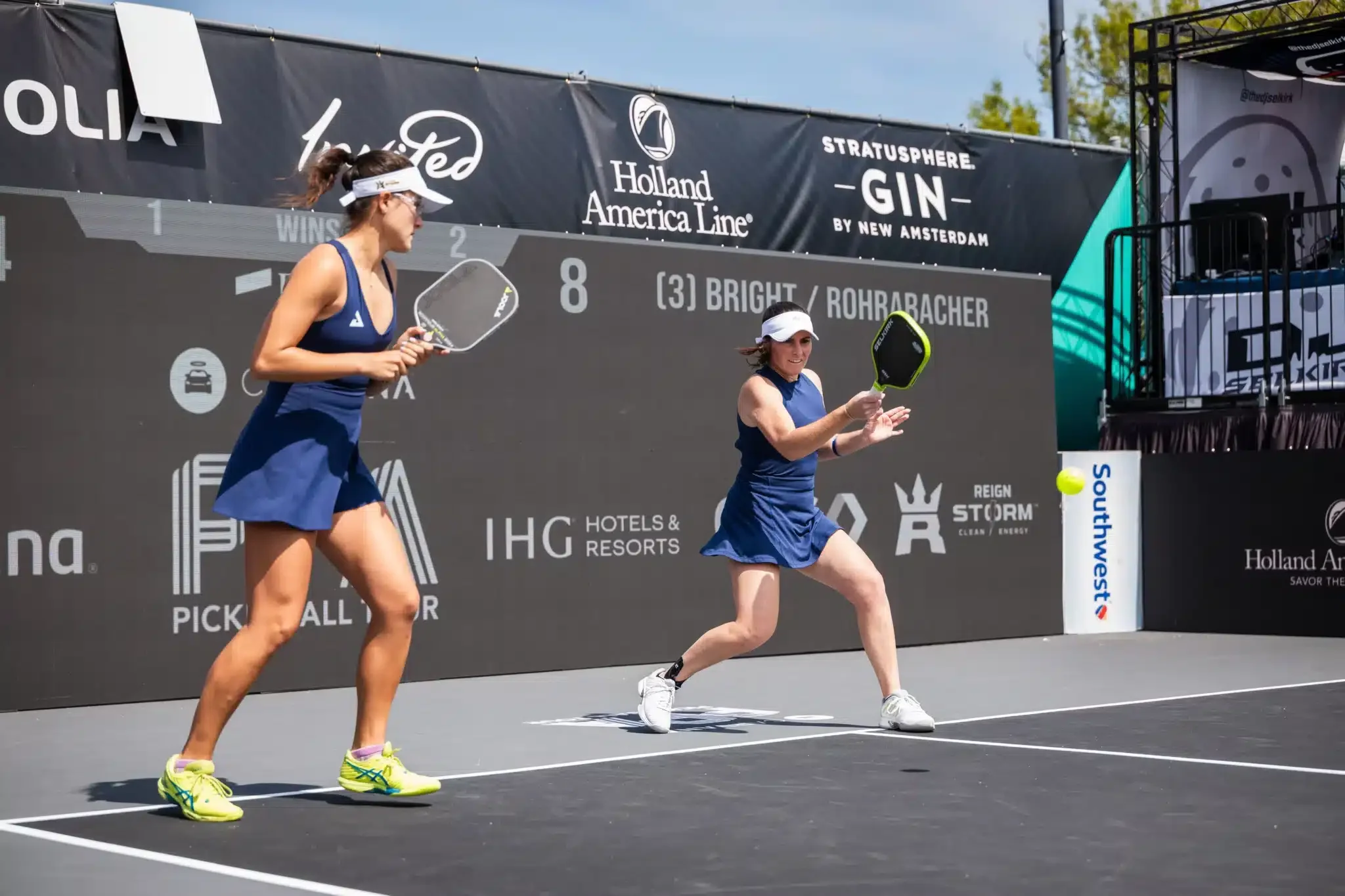
Source : PPA Tour
The Addition of "Clearly"
The new rulebook language, which took effect January 1, 2026, now mandates that all three critical elements of a legal volley serve must be clearly visible and compliant. According to Rule 7.C, servers must now demonstrate that:
The paddle is moving in a clear upward arc when making contact with the ball
The highest point of the paddle head is clearly not above the highest part of the wrist joint at contact
The ball is clearly no higher than the server's waist when struck
This represents a fundamental shift in how officials are instructed to interpret questionable serves. Under the previous framework, borderline serves often received the benefit of the doubt. The 2026 clarification removes that cushion.
"In officiated matches, if a serve is borderline or too close to call, referees are now instructed to rule it a fault rather than giving the server the benefit of the doubt," the USA Pickleball Rulebook Change Document states.
Targeting the Gray Area
The modification addresses a growing trend that has developed as players push the boundaries of legal serving technique. Particularly problematic have been what many in the community refer to as "sidearm serves," where players approach the maximum allowable contact point at waist height while using horizontal paddle motions that test the upward arc requirement.
Tournament referee experience has shown that determining violations in real time presents significant challenges. The waist height requirement, for example, becomes difficult to enforce when servers wear loose fitting clothing that obscures the actual waistline. Similarly, the wrist position rule requires split second judgments that can vary based on viewing angle and distance.
The new language aims to eliminate these ambiguities by establishing a higher threshold for legality. If the referee cannot clearly see that all three requirements are met, the serve is now a fault.
No Changes to Mechanics
USA Pickleball has emphasized that the actual mechanics of serving have not changed. Players may continue to use either the volley serve or the drop serve, and both forehand and backhand motions remain legal.
The drop serve, which was permanently added to the rulebook in 2022, continues to offer an alternative that avoids the strict vertical requirements of the volley serve. With a drop serve, players may drop the ball from any natural height and strike it after it bounces, with no restrictions on contact point height, paddle position, or swing arc.
The rules committee also clarified another point of confusion regarding spin generation. The 2026 rulebook explicitly prohibits manipulating the ball with fingers or hands to add spin during the release but confirms that players may apply spin with the paddle at the moment of contact during the serve.
Enforcement Philosophy
The practical impact of these changes will be most pronounced in tournament settings where trained referees officiate matches. During recreational play, where most games occur without officials, enforcement will likely continue to rely on player self regulation and mutual agreement.
However, the new standard does provide clearer guidance for situations where serve legality becomes disputed. Players can no longer argue for marginal serves that technically might comply with the rules. Under the 2026 framework, serves must be demonstrably and obviously legal.
Context and Broader Changes
The serve clarification is part of a larger set of 2026 updates that USA Pickleball characterizes as refinements rather than overhauls. Other notable changes include eliminating the game point freeze in rally scoring formats, strengthening language around player conduct and ejections, clarifying the net post rule for balls that bounce in before making contact with the post, and formalizing the Adaptive Standing Division for players with mobility or balance impairments.
The rules committee reviewed more than 114 proposed changes submitted by USA Pickleball members during the April through June 2025 submission window. These proposals underwent public comment before committee evaluation and board approval, resulting in the December 2025 publication of the updated rulebook.
Looking Ahead
USA Pickleball continues to monitor the impact of rule modifications and will solicit feedback from players, referees, and tournament organizers throughout the 2026 season. The window for submitting proposed rule changes for 2027 opens April 1, 2026.
For competitive players, adapting to the stricter interpretation means ensuring serving technique leaves no room for referee doubt. Tournament preparation should include video review of serve mechanics from multiple angles and consultation with certified referees when questions arise about legality.
The organization has made the full 2026 Official Rulebook and the detailed Rulebook Change Document available through its website at usapickleball.org, providing comprehensive explanations for each modification and the rationale behind committee decisions.
As pickleball continues its rapid growth trajectory, these incremental adjustments reflect USA Pickleball's approach to maintaining competitive integrity while preserving the sport's accessible character. The serve remains the foundation of every point, and the 2026 clarification ensures that foundation rests on clearly defined and consistently enforced standards.