
What to Train for Pickleball: The Most Important Muscles for Strength, Balance, and Power
Pickleball isn’t just about placement or finesse - movement matters. And the foundation of effective, efficient movement on the court comes from strength. Not only does strategic strength training boost performance, but it also enhances longevity and helps players stay active and injury-resistant as they age.
Maintaining muscle mass becomes increasingly important with age. Research cited by performance professionals suggests that preserving muscle strength may significantly reduce the risk of injury, helping players stay active and competitive longer.
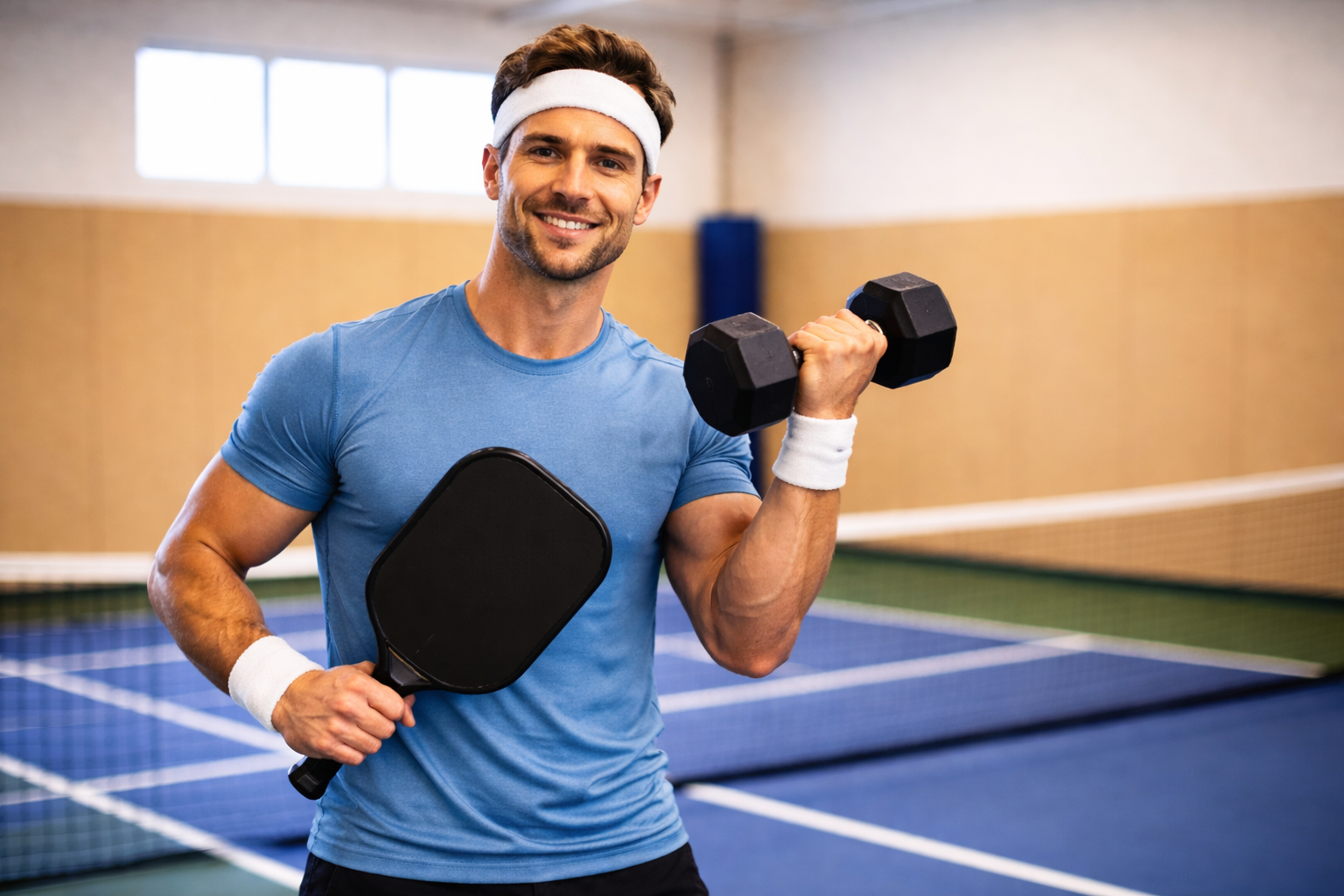
Areas That Make the Most Impact
1. Core Strength
A solid core is just as aesthetic as it is functional. Core strength helps stabilize your body during:
Quick pivots
Explosive lateral movements
Controlled strokes and volleys
A stable trunk aids balance and power transfer from lower to upper body, improving accuracy and shot strength.
2. Lower Body Power
Strong legs and hips give you the rapid acceleration and deceleration needed for:
Reaching wide shots
Shifting direction quickly
Maintaining balance during volleys and dinks
Exercises like squats, lunges, and deadlifts build foundational strength for better footwork.
3. Upper Body Strength
Volleys, serves, and drives all benefit from stable shoulder, back, and arm muscles. Strengthening the upper body improves control over paddle movement and helps maintain consistent contact quality.
Functional Benefits Beyond the Court
Strength training doesn’t just make you better in pickleball. It supports everyday movement and long-term health. Players who integrate strength work into their routines often experience:
Improved bone density and joint health
Reduced risk of wear and tear injuries
Stronger muscle support for sudden movements
Experts note that strength work should be part of any serious pickleball fitness program, focusing on balanced development of upper body, lower body, and core strength.
Getting Started with Strength Training
To see meaningful improvements, consistency is key. Strength training sessions 2-3 times per week and paired with your regular pickleball practice or cardiovascular work helps to build muscle effectively, without losing your touch. Start with proper technique, use progressive resistance, and balance strength work with adequate rest to maximize gains and reduce injury risk.
Incorporating strength training into your off-court approach gives you more than just power. It enhances endurance, control, and confidence, keeping you at your best for every match.
Lower Body - Split Squat
How it helps pickleball:
Improves lunging, quick stops, and pushing off for wide shots.
How to do it:
One foot forward, one foot back (like a lunge)
Lower until your back knee nearly touches the floor
Keep chest tall and front knee stable
Sets & Reps:
3 sets × 8–12 reps per leg
Rest 45–60 seconds between sets
Upper Body - Push-Up
How it helps pickleball:
Improves paddle control, shot power, and shoulder durability.
How to do it:
Hands slightly wider than shoulders
Body in a straight line
Lower chest toward floor, push back up
Modify if needed:
Use knees or a wall if full push-ups are too difficult.
Sets & Reps:
3 sets × 10–15 reps
Rest 45–60 seconds
Core - Plank with Shoulder Taps
How it helps pickleball:
Builds balance for dinks, volleys, and quick directional changes.
How to do it:
Start in plank position
Tap right hand to left shoulder, then switch
Keep hips as still as possible
Sets & Reps:
3 sets × 20–30 taps total
(10–15 per side)
Rest 30–45 seconds