
Master the Read: How to Predict Your Opponent’s Every Move
Reading the paddle is like reading your opponent’s mind a split second before the ball leaves their strings. Those extra milliseconds are often the difference between getting jammed and countering with confidence.
In pickleball, anticipation is a skill you can train, not a superpower you’re either born with or without. If you find yourself constantly surprised by speed-ups or caught off-guard by a soft drop, you aren't lacking "fast twitch" muscles—you’re likely just looking at the wrong things.
By learning to decode an opponent's grip, paddle preparation, and body cues, you can gain an "early download" of exactly what is coming next.
Why Reading the Paddle Beats Raw Reflexes
In fast-paced exchanges at the kitchen, the ball often moves too quickly for pure reaction. If you only start moving after the ball leaves their paddle, you are late by definition. Developing a "read" gives you a head start on three vital pieces of information:
Likely shot type: Is it a drive, dink, drop, or lob?
Likely direction: Are they going cross-court, down the line, or at your body?
Likely pace: Is this an aggressive attack or a soft reset?
The earlier you process these cues, the less you have to rely on scrambling footwork. Instead of guessing, you are pre-loading the correct response.
The Role of the Grip: Spotting the "Big Picture"
While it is difficult to see tiny finger adjustments mid-rally, you can reliably read the "big picture" of an opponent's grip. Most recreational and intermediate players have a "comfort zone" grip that they struggle to hide.
Forehand vs Backhand Commitment Watch for the rotation of the paddle face. If the edge or logo points more towards their non-dominant side as they prepare, expect a backhand; if the face is more open on their dominant side, a forehand is imminent.
Grip Tension A "white-knuckle" grip almost always precedes an attack, such as a drive or a punch volley. Conversely, a looser, more relaxed hand usually pairs with touch shots like dinks and drops.
The Comfort Zone Most players funnel rallies back into the grip they like best. If you know an opponent hates hitting backhand rolls, even a slight adjustment into their "safe" forehand position is a tell that they are looking to drive the ball.
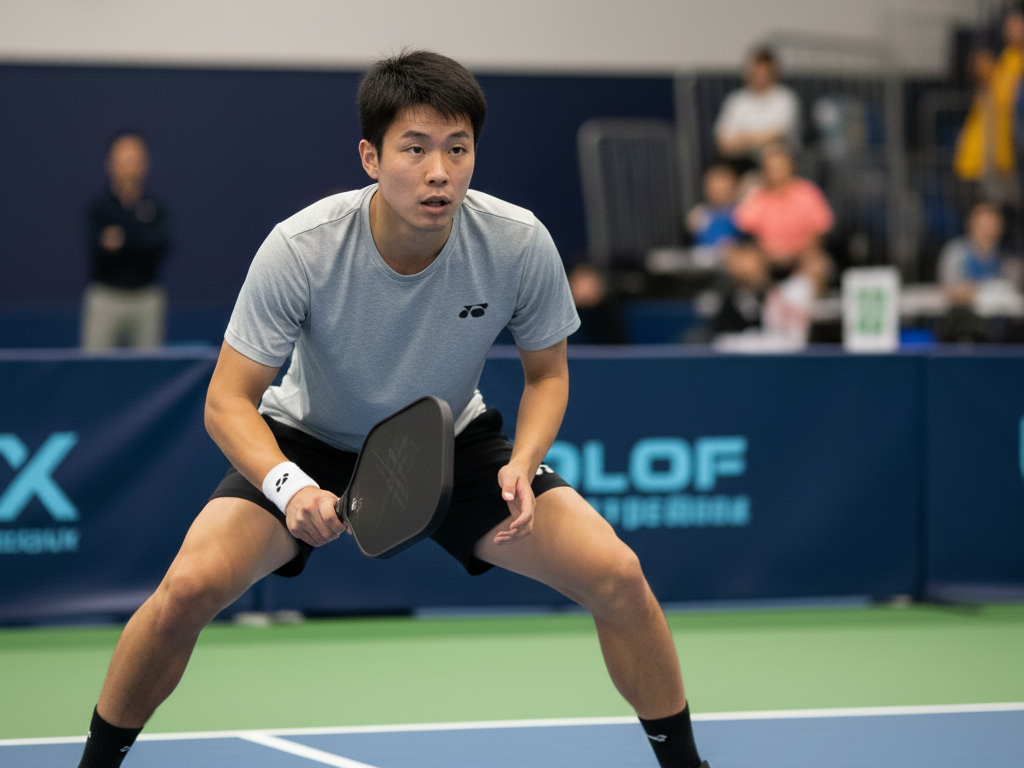
Paddle Prep: The Ultimate Shot Predictor
If the grip sets the foundation, the "prep" tells the story. To master this, you must train your eyes to shift from the ball to the opponent’s paddle just before contact.
1. Paddle Face Angle
Closed Face (tilted down): This signals a drive, punch, or topspin roll. Expect a low-to-high swing with significant pace.
Open Face (tilted up): This suggests a dink, drop, or defensive lob. The swing path will be under the ball with less pace.
2. Paddle Height
Chest Height: If the paddle is held high in front of the body, they are ready to punch or counter-attack.
Knee Height: If the paddle drops low, they are prepping for a soft reset or a lifting shot. This is your cue to move in, not back.
3. Backswing Length
A large backswing means the player is loading up for a drive or heavy topspin. A compact, short backswing signals touch and control. The golden rule: compact prep usually means soft; long prep usually means fast.
Body Alignment: Forecasting Direction
Even high-level players struggle to hit against their body alignment under pressure. By layering body cues over paddle cues, you can predict where the ball is going.
Shoulders and Hips: If the hips are turned cross-court, there is a high probability the shot will follow that angle. If they are squared to you, expect the ball straight ahead or at your middle.
Weight Distribution: A player leaning forward with their weight on the front leg is usually in an attacking mindset. If they are leaning back, they are likely playing defensively with a lob or a soft block.
Distance from the Ball: When a player is "jammed" (the ball is too close to their body), it is physically easier for them to hit cross-court. If they have plenty of space in front of them, they have the freedom to target your feet or find a sharp angle.
Practical Drills to Build Your Anticipation
You can turn this theory into a habit with a few simple, coach-friendly drills:
The Callout Drill: Have a partner feed controlled balls. Before you hit your return, you must call out "fast" or "soft" based solely on their paddle angle and prep.
Direction Prediction: At the kitchen, have a partner alternate between cross-court and line dinks. You must say "cross" or "line" out loud the moment you read their hips and paddle.
Grip-Tension Awareness: Have players exaggerate their grip tension—very tight for attacks, very loose for resets. This helps both players recognise what "tells" look like in a real match environment.
How to Hide Your Own Tells
Once you learn to read others, you must ensure you aren't an open book yourself. You can disguise your intentions by:
Standardising your ready position: Keep your paddle at a consistent height so your opponent gets less information.
Reducing "fidgeting": Avoid re-gripping your paddle between every shot, as this telegraphs your comfort zones.
Using "fake" tempo: Occasionally show a slightly larger backswing but execute a soft drop to keep your opponents guessing.
