
How the Right Paddle Can Instantly Improve Your Game
In paddle sports like pickleball and padel, players spend countless hours working on footwork, strategy, and shot selection, but many overlook one of the most powerful performance upgrades available: the paddle itself. Choosing the right paddle for your game isn’t about hype or price tags; it’s about physics, biomechanics, and how efficiently your equipment translates your swing into ball speed, spin, and control.
Let’s break down how paddle design directly affects your performance, and how the right choice can instantly elevate your game.
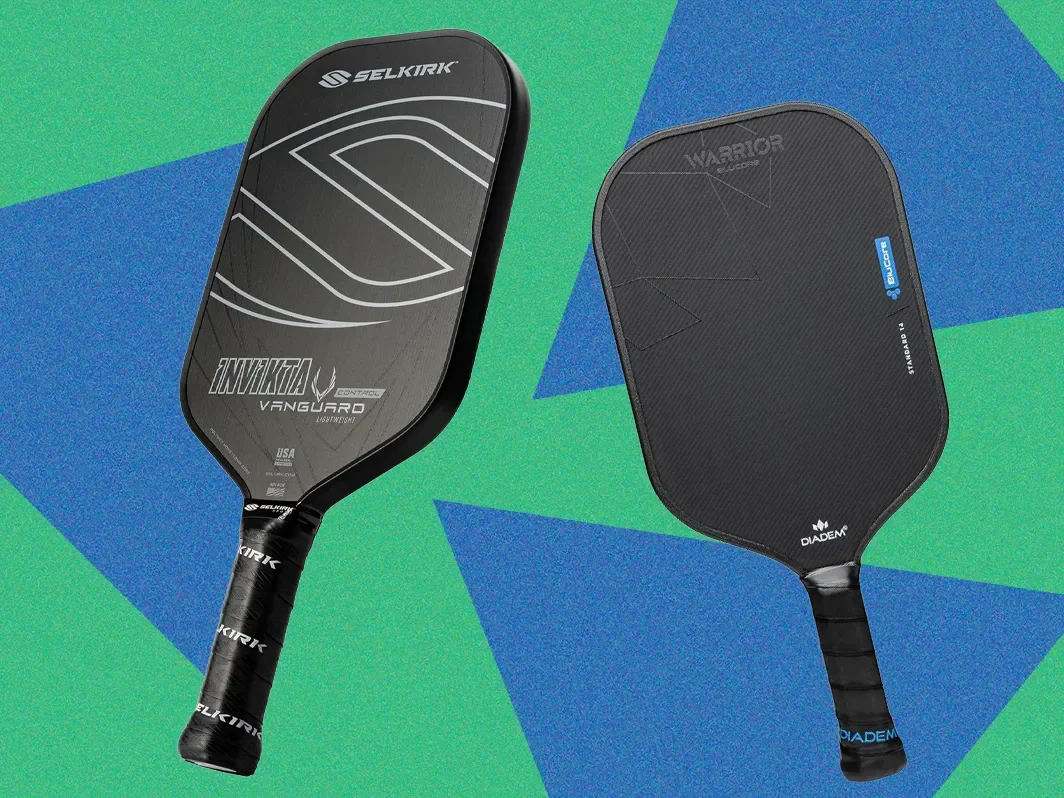
1. Swing Weight: How Heavy the Paddle Feels in Motion
Swing weight is one of the most important but least understood paddle specs. It doesn’t describe how heavy a paddle is on a scale. It describes how heavy it feels when you swing it.
A paddle with more weight toward the tip has a higher swing weight. This gives you:
More plow-through on volleys
More power on drives
More stability on off-center hits
But it also requires:
More strength
Slower hand speed at the net
Players who rely on fast hands, resets, and dink battles usually benefit from lower swing weight, while baseline attackers often gain an advantage from higher swing weight paddles that drive the ball deeper and heavier.
If your paddle’s swing weight doesn’t match your play style, you’re either leaving power on the table - or fighting your own equipment.
2. Twist Weight: Your Paddle’s Forgiveness Factor
Twist weight measures how resistant the paddle is to twisting when you don’t hit the ball in the center of the face.
A higher twist weight means:
Fewer mishits
More consistent shot depth
Better stability on blocks and counters
This is especially important in fast exchanges at the kitchen line, where even small mis-hits can cause pop-ups or errors. Wider paddles and paddles with reinforced edges usually have higher twist weight, giving you more margin for error.
If you’re struggling with control or consistency, upgrading to a paddle with higher twist weight can make you feel like you suddenly got better overnight.
3. Paddle Shape: Why Geometry Matters
The shape of your paddle determines more than looks - it defines your sweet spot, reach, and stability.
Standard (Widebody)
Larger sweet spot
Higher twist weight
More forgiveness
Best for: control players, beginners, and defensive specialists.
Elongated
Longer reach
Higher swing weight
More power and spin
Best for: singles players, aggressive baseliners, and topspin hitters.
Your ideal paddle shape should match how you win points. If you play fast hands and soft game, widebody gives you more reliability. If you like driving and passing, elongated gives you more leverage.
4. Paddle Length: Power vs Control
Most paddles range from about 15.5” to 17”. That extra length might not seem like much—but it dramatically changes leverage.
Longer paddles:
Increase swing weight
Generate more power
Improve reach
Shorter paddles:
Feel quicker
Improve maneuverability
Make resets and dinks easier
A paddle that’s too long for your mechanics can make you late on volleys. One that’s too short may cost you put-away power. Matching paddle length to your style is critical.
5. Materials: Where Feel and Spin Are Born
The surface material of your paddle controls grip on the ball, which affects spin, touch, and feedback.
Carbon Fiber (Raw Carbon)
Excellent ball grip
Great for spin
Soft, controlled feel
Fiberglass
More pop
Livelier response
Slightly less spin
Kevlar & Hybrid Weaves
Blend of power and control
Very stable
Increasingly popular at high levels
Players who rely on heavy topspin and soft touch benefit from carbon-based faces. Players who like quick winners and punchy volleys may prefer fiberglass.
6. Paddle Core: The Engine Inside
The core determines how the paddle responds at impact.
Polypropylene Honeycomb
Soft feel
Great control
Excellent for dinks and resets
Thicker cores (16mm+)
More control
Bigger sweet spot
Slower rebound
Thinner cores (13–14mm)
More power
Faster response
Less forgiveness
If you struggle with touch and consistency, a thicker core will help. If you want more pace and put-away power, a thinner core may unlock your offense.
How the Right Paddle Feels Like a Skill Upgrade
When your paddle’s swing weight, twist weight, shape, materials, and core are all aligned with your game, something magical happens:
Your strokes require less effort to produce better results.
Many players try to improve by swinging harder or training more, but switching to a better-matched paddle often creates instant gains in:
Shot depth
Spin
Control
Consistency
It’s one of the few changes in sports that can immediately raise your level without changing your technique.
Final Thought
Your paddle is not just a piece of equipment, it’s an extension of your body. When its weight distribution, shape, materials, and feel are tuned to your playing style, you unlock performance you didn’t know you had.
The right paddle doesn’t just help you play better.
It lets you play your real game.