
I. Crosscourt Dink Strategy Overview: The Default Shot
The crosscourt dink is the safest and most strategic option in a typical doubles exchange. It is the core idea around which winning rallies are built.
Core Idea: Maximise Travel Distance. Hitting diagonally across the court creates the longest possible path for the ball to travel. This provides you with the greatest margin for error while simultaneously forcing the opponent to move the maximum distance laterally.
Why It Works: Pressure and Recovery. The longer diagonal path increases the margin for error on your side (the net is lower in the middle) while compelling the opponent to stretch their balance and slow their recovery time. It naturally steers returns towards the net centre, where they are harder to place with pace, often resulting in high, poachable balls.
When to Use It: Use crosscourt dinks to push opponents off the Non-Volley Zone (NVZ) line, to control the pace and rhythm of the point, and, most importantly, to set up attacking opportunities when the opponent over-commits to retrieving a wide dink.
II. Topspin Crosscourt Dink Mechanics
While a basic slice or flat dink keeps the ball low, a topspin dink adds an aggressive, downward trajectory that is difficult to handle.
The Goal of Topspin: Impart forward spin to the ball so it dips steeply after crossing the net and kicks low after the bounce. This forces the opponent to make contact at a lower, less powerful height.
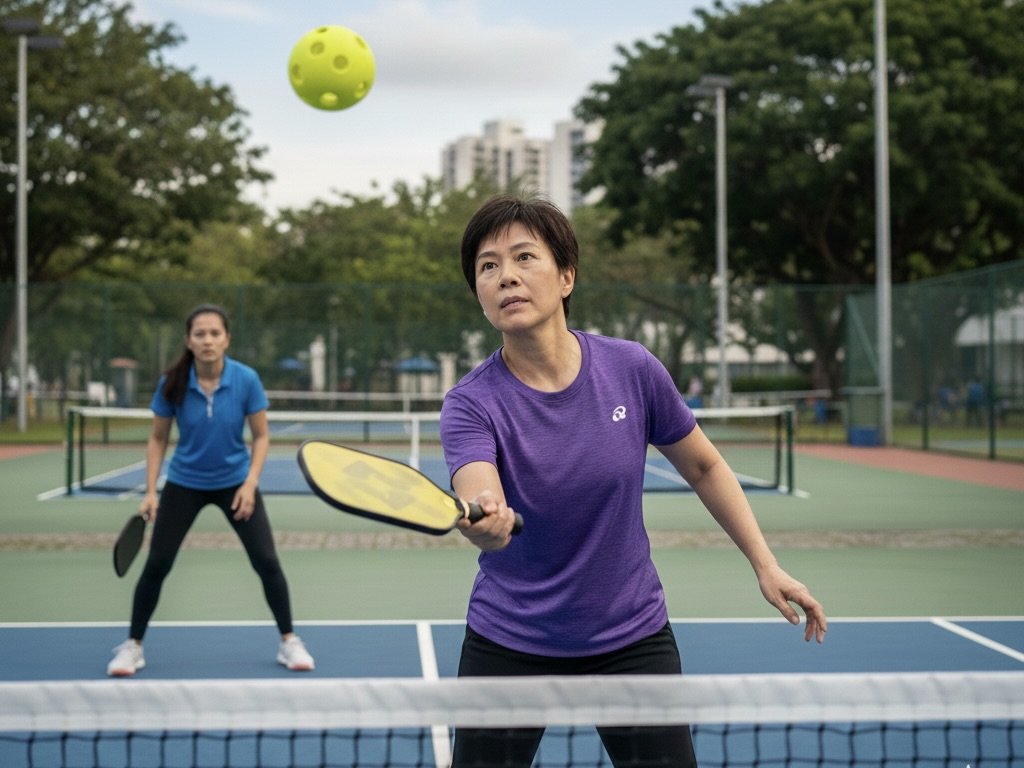
Grip and Stance: Stand with a comfortable, compact base at the mid-court line, shoulder-parallel to the net. Your paddle should be slightly closed. The key is to move under the ball to allow you to brush up and across, finishing with a low-to-high paddle path that accelerates through contact.
Contact and Path: Contact the ball slightly in front of your body, ideally between waist and chest height. Brush upward and outward towards the opponent’s NVZ corner. The paddle face should angle slightly upward to promote forward spin without elevating the ball too high.
Spin and Trajectory: The gentle topspin keeps the ball low after it bounces, making it much harder for the opponent to drive through the ball or hit a powerful volley. This is an excellent tool to transition from a defensive position to an offensive one.
III. Tactics for Using Crosscourt Dinks
Effective dinking requires consistent mechanics coupled with smart placement and movement.
Diagonal Control: To maximise pressure, direct the dink to the opponent’s non-volley zone sideline, landing just inside the kitchen boundary. This placement maximises the distance they must cover and forces them to return the ball from a wide, low position.
Spin Variation is Key: Do not hit the same shot every time. Mix soft, low-drag dinks with your light topspin ones to disrupt rhythm and timing. Varying the spin can cause the opponent to misjudge the ball's bounce, creating poachable returns for you or your partner.
Footwork Synergy: Consistency comes from a stable base. Move with a controlled shuffle, keeping your feet active and your weight balanced. Early hip rotation and a stable base help maintain consistency and power on the diagonal shot.
Positioning Under Pressure: If an opponent pushes you back, your immediate objective is not to win the point, but to keep the rally on the diagonal path. Use patient, accurate dinks to maintain control and create the opening for your next shot.
IV. Techniques for Finishing Points
The crosscourt dink is a set-up shot. The kill comes on the weak return it generates.
Attacking off the Dink: Once you successfully execute a deep, wide crosscourt dink, anticipate a weak or high return. Step into the court and launch an offensive follow-up, such as a fast drive or a high-velocity volley to the open court, taking advantage of your opponent's stretched position.
Reading the Return: Immediately watch the opponent’s paddle face. Backspin or a high perimeter shot often indicates a potential short return—these cues should prompt you to attack quickly or drop a controlled shot to reset the rally.
NVZ Pressure: If your opponent retreats to defend or misreads the angle, capitalise on their error. Transition from the dink to a mid-court drive or a sharp drop shot to keep the advantage in your favour, maintaining your beachhead at the NVZ.
Common Mistakes and How to Fix Them
Poor Timing: Hitting the ball too early or too late compromises accuracy and spin.
Fix: Practise controlled contact drills focusing on the exact moment the ball should meet the paddle.
Over-Rotating: Excessive torso rotation destabilises your balance and consistency.
Fix: Keep your shoulders relatively square to the net and use a stable, low base, rotating the hips only slightly to generate spin.
Hitting Too High: Elevating the ball over the net invites an easy winner from the opponent.
Fix: Maintain a low trajectory with controlled, upward brushing contact and an appropriate, slightly upward paddle face angle.
Drills For Dinking Mastery
Consistent dinking is a product of repetition. Use these drills to build muscle memory:
Beginner: Depth and Accuracy
Drill: Stand at the non-volley zone line and dink crosscourt, aiming for the edge of the opponent's NVZ boundary.
Focus: Depth, consistency, and maintaining a low flight path.
Sets: 3 sets of 10 successful reps per side.
Intermediate: Integrating Topspin and Footwork
Drill: Practise the crosscourt dink with light topspin at a moderate pace. After each dink, take a small lateral footwork step (shuffle) to simulate match movement.
Focus: Adding spin while integrating active feet and balance.
Sets: 4 sets of 8 successful reps.
Advanced: Live Rally and Finish
Drill: Start a live point with only crosscourt dinks. When an opponent's return is weak or high, transition immediately to an attacking shot (drive or hard volley) to finish the point.
Focus: Spin variation, shot anticipation, and finishing the point under simulated match pressure.
Time: 6–8 minutes of continuous rallying, followed by a brief coaching/feedback break.
Final Thoughts
The Crosscourt Dink Trap, when combined with the precision of topspin, is the highest-percentage play in doubles pickleball. It is the silent killer, slowly wearing down your opponent until the inevitable high return invites you to step in and finish the point. Master this shot, and you will master the kitchen.
